



One of the first questions many women ask when considering surrogacy is:
How much do surrogates get paid?
But surrogate compensation is more than one number. A compensation package may include base pay, monthly allowances, milestone payments, travel expenses, childcare, lost wages and other pregnancy-related benefits.
So when comparing surrogacy programs, it’s important to understand what the advertised amount actually includes.
Here’s a simple breakdown of how surrogate compensation works in 2026.
Base compensation is the core payment a gestational surrogate receives for the time, commitment and physical demands involved in the surrogacy journey.
The amount can vary based on:
At New Grace, first-time surrogate base compensation may start around $55,000 for qualified candidates, while experienced surrogates may qualify for higher compensation.
Base compensation is typically paid according to a schedule rather than as one lump sum.
In addition to base pay, a surrogate compensation package may include several other payments, allowances and reimbursements.
A monthly allowance may help cover miscellaneous expenses related to the surrogacy journey without requiring the surrogate to submit receipts for every small purchase.
The amount and covered expenses depend on the individual agreement.
Some compensation packages provide separate payments for specific milestones, such as beginning fertility medications, completing an embryo transfer, or confirming pregnancy.
These payments may be separate from base compensation.
A maternity clothing allowance may be provided during pregnancy to help cover clothing needs as the pregnancy progresses.
If travel is required for medical screening, fertility clinic appointments or embryo transfer, qualifying expenses may be covered.
Depending on the agreement, this could include transportation, airfare, lodging and certain meal expenses.
Many surrogates already have children and work full-time.
If a surrogate needs childcare for qualifying appointments or must miss work because of certain surrogacy-related medical requirements, the agreement may provide reimbursement for childcare and eligible lost wages.
Surrogacy-related medical expenses are an important part of the financial planning process.
Before treatment begins, the surrogate’s health insurance situation is generally reviewed to determine whether her existing policy can appropriately cover a surrogacy pregnancy.
Depending on the circumstances and contract, intended parents may be responsible for certain qualifying:
If the surrogate’s existing insurance is not appropriate for the journey, alternative coverage may need to be arranged.
The exact insurance arrangement varies by case and should be reviewed before treatment begins.
Yes. Some agreements provide additional compensation when certain circumstances occur during the journey.
These may include:
These payments are not necessarily guaranteed because they depend on what happens during the pregnancy.
That’s why it is important to distinguish between guaranteed base compensation and a projected total compensation package.
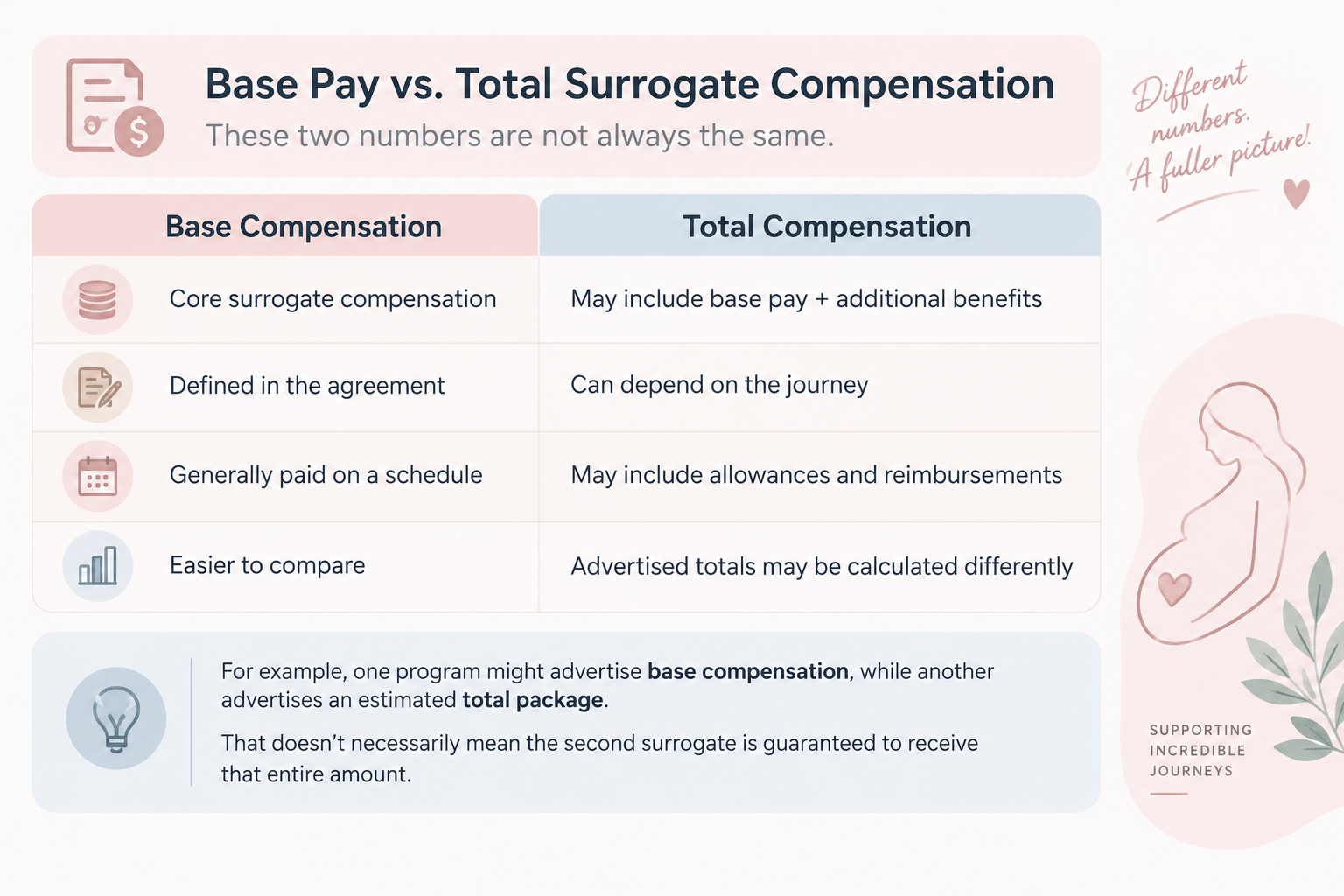
Before comparing programs, ask:
“What is my base compensation, and what additional payments are included in the estimated total?”
Experienced surrogates may qualify for higher base compensation.
Someone who has already completed a successful surrogacy journey understands many parts of the process, including IVF medications, embryo transfer, communication with intended parents and the expectations of a surrogate pregnancy.
However, compensation is still determined individually.
There is no universal surrogate pay rate in the United States.
Compensation varies based on location, experience, agency, intended parents and individual circumstances.
At New Grace, qualified first-time surrogate candidates may receive base compensation starting around $55,000, with experienced surrogates potentially qualifying for more.
Additional allowances, benefits and reimbursements may also apply.
When comparing programs, focus on the entire compensation structure—not just the largest advertised number.
Usually not. Base compensation is generally distributed according to the payment schedule established in the surrogacy agreement.
Some agreements provide additional compensation for carrying multiples. The exact amount depends on the contract.
Certain completed milestones or qualifying expenses may still be compensated or reimbursed depending on the agreement, even if the transfer does not result in pregnancy.
Qualifying medical expenses are generally addressed separately through insurance and the surrogacy agreement rather than simply being deducted from base compensation.
Tax treatment depends on individual circumstances. Surrogates should consult a qualified tax professional for advice specific to their situation.
Before choosing a surrogacy program, make sure you understand:
A good surrogate compensation package shouldn't just look attractive.
It should be clear and transparent.
At New Grace, we support prospective surrogates throughout the journey—from application and screening to matching, medical clearance, legal clearance, embryo transfer and pregnancy.
Qualified candidates generally must be 21–39 years old, a U.S. citizen or permanent resident, have previously delivered at least one child, and meet applicable medical and program requirements.
If you're considering becoming a surrogate, submitting an application is the first step toward learning whether you may qualify.
*Compensation and benefits vary by individual case and agreement. Information provided here is for general educational purposes and does not guarantee a particular compensation amount.
New Grace Fertility | Asian Family Surrogacy Inc.
📧 Email: info@newgracefertility.com
🌐 Website: www.cneggbank.com|www.newgracefertility.com